Home / Guide / Guide: buying from a German wholesaler as a Swiss retailer
How do I buy from a German wholesaler as a Swiss retailer?
Last updated: 10 November 2026
You register with your commercial register extract, order in the shop and receive the goods as a DHL parcel on DAP terms. The invoice carries no German VAT; at the border the parcel carrier declares the shipment, and you as the recipient pay Swiss import VAT, any customs duty and the carrier's clearance fee. As of November 2026.
 Takis Blue Heat 100g
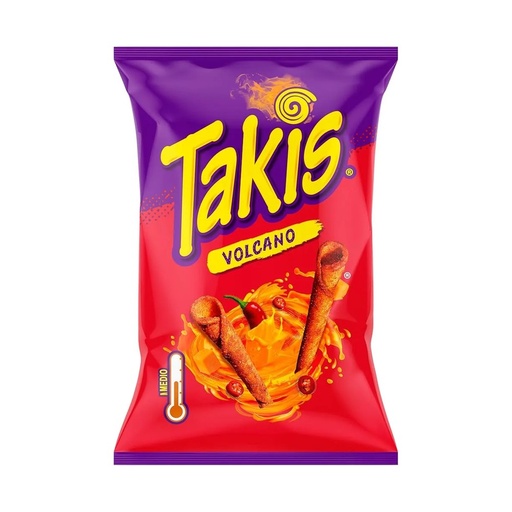 Takis Queso Volcano 100g
What does DAP mean for a parcel to Switzerland?
DAP stands for Delivered at Place. It is one of the delivery terms in the Incoterms 2020 rules published by the International Chamber of Commerce (ICC). According to the ICC's explanatory notes, the seller has delivered once the goods are at the buyer's disposal at the agreed destination, ready for unloading. Until that point the transport risk stays with the seller.
Customs tasks are split. The seller clears the goods for export where that is required. The seller has no obligation to clear them for import: the ICC places import clearance and import duties with the buyer.
For your order this means that we arrange transport to your address and take care of the export from Germany. Everything that arises on import into Switzerland is charged to you. In our shop, DAP is the only term offered for Switzerland.
Who declares the shipment to Swiss customs?
Every shipment from abroad is declared for assessment to the Federal Office for Customs and Border Security (FOCBS, in German BAZG). For parcels, the FOCBS states that Swiss Post and the courier companies take this on.
The declaration is based on the papers we attach to the parcel. DHL requires a CN 23 customs declaration and a commercial invoice for every parcel to a country outside the EU (status September 2026). Above a goods value of 1,000 euros per parcel, and for certain goods below that, DHL says an electronic export declaration to German customs is needed as well. Splitting an order across several parcels does not change this. The declaration is the sender's job.
Under FOCBS guideline 69-01 (edition of 1 January 2025), the recipient of the delivery is in principle named as the importer in the customs declaration. That is you. Swiss Post and the courier companies charge their own fees for clearance, and the FOCBS says it has no influence on them. Ask the carrier for the amount.
Which charges arise on import?
Import VAT. Switzerland levies VAT on imports. The standard rate is 8.1 per cent and the reduced rate is 2.6 per cent; both have applied since 1 January 2024 (Federal Tax Administration, page updated 5 November 2026). The reduced rate covers food, among other things. Which rate applies to a single item is settled in the customs declaration.
According to the FOCBS, the tax is calculated on more than the value of the goods: all costs up to the destination in Switzerland count, for example packaging, freight, insurance and clearance. Tax amounts of up to 5 francs and customs duties of up to 5 francs are not collected.
Customs duty. Since 1 January 2024 Switzerland has charged no duty on industrial products. According to the FOCBS and the State Secretariat for Economic Affairs (SECO), this covers chapters 25 to 97 of the customs tariff, with a few exceptions in chapters 35 and 38. Agricultural products in chapters 1 to 24 are excluded, including processed agricultural products. Duties remain there, and SECO states they continue to be charged by weight.
Snacks and drinks mostly fall into the agricultural chapters; what counts is the tariff number of the individual item. We do not quote individual duty rates. You can look them up in Tares, the FOCBS electronic customs tariff: after you select the eight-digit tariff number it shows duty rates, other charges such as VAT, and notes on permits. The FOCBS adds that the legal texts are what counts. Classification is best settled with your freight forwarder.
What does the invoice look like, and which proof do we need?
When we ship the goods to Switzerland, the delivery is exempt from German VAT as an export delivery (section 4 no. 1 a) in conjunction with section 6 of the German VAT Act); our invoice then shows no German VAT. You pay the tax in Switzerland instead, as import VAT. If your own forwarder collects the goods, we settle the export and the proof with you beforehand.
As proof of business you upload your commercial register extract when you register, for example the extract from the Zefix company index. You also give us your enterprise identification number. The UID consists of the country code CHE and nine digits, such as CHE-123.456.789, and is managed by the Federal Statistical Office. If your company is registered for VAT, the UID with the suffix MWST is also your VAT number.
Swiss companies are not checked through the EU's VIES system, because Switzerland does not take part in VIES. Whether and how you can reclaim the import VAT you paid as input tax is a question for your fiduciary or tax adviser. We give no advice on it.
What do you need to check on labelling?
Food. Swiss food law requires the mandatory particulars to be printed in at least one official language of the Confederation (Article 36 of the Foodstuffs and Utility Articles Ordinance; the Federal Food Safety and Veterinary Office, FSVO, says the same). Other languages are allowed only by way of exception, when consumers in Switzerland are thereby informed sufficiently and unambiguously (Article 36(2)(c)). The FSVO lists among the mandatory particulars the product name, ingredients and allergens, date marking, name and address of the responsible company, country of production and the nutrition declaration.
What we ship is intended for sale in the EU. That does not automatically mean every label carries a Swiss official language and all Swiss mandatory particulars. Look at each item separately, and if in doubt ask us for a photo of the label before you order.
Toys. In Switzerland, toys for children up to 14 years come under Swiss food legislation, and the Toy Ordinance sets the safety requirements. The FSVO states that toys placed on the Swiss market are subject to the same safety standards as in the EU. Manufacturers, importers and dealers have to meet the requirements, keep documents and label correctly. Warnings must use the prescribed wording, and toys must be traceable.
In its questions and answers on the Toy Ordinance dated 11 December 2015, the FSVO noted that conformity assessments are mutually recognised and that market access is eased for imports from the EU. The State Secretariat for Economic Affairs (SECO) still lists toys as a chapter of the mutual recognition agreement. Please ask the FSVO for the current position. We send declarations of conformity and test reports for our toys on request. Whether an item may be sold in Switzerland is for you to check as the importer.
Is there a deposit on cans and PET bottles in Switzerland?
The Federal Office for the Environment (FOEN) does not describe a general mandatory deposit on single-use drinks packaging of the kind Germany has. Its overview (published 31 July 2025) says a deposit is compulsory for refillable packaging and for single-use packaging made of PVC. For single-use PET and metal packaging it names contributions to recycling organisations or a take-back obligation instead.
The other half of the question is the German deposit on cans: whether it is charged on an export is something we agree with you order by order. Our article on can deposit on exports explains the background.
How do you order from MDH, and what works in practice?
MDH Distribution supplies businesses only, not private buyers. You create a retailer account and submit your commercial register extract. Approval usually comes within 1–2 working days, and only then do prices and quantity tiers become visible. No minimum order value applies to Swiss customers either, and the smallest unit is a whole carton.
At checkout you choose the DHL parcel on DAP terms for your Swiss delivery address. The shipping cost is shown there before you place the order. The import charges described above come on top.
Bundle your orders. Customs papers and clearance apply per parcel. Retailers therefore tend to do better with fewer, mixed orders than with single cartons ordered one after another.
Collection and larger quantities. We do not offer pallets to Switzerland in the shop. Larger quantities can be discussed on request. You can also have the goods collected from our Mettmann warehouse by your own haulier. The export has to be clarified beforehand, so email info@mdh-distribution.com before you send a truck.
Range. In demand are spicy chips on our Takis wholesale page, Korean noodles on the Buldak wholesale page and trend toys on the squishy wholesale page. New is the Schokoellsen milk chocolate 70 g in a display of 28 bars, open for pre-order until the sales launch on 15 November 2026.
The short version is on the page wholesale for retailers in Switzerland; the comparison with Germany and Austria is under wholesale in the DACH region.
Sources
- Incoterms 2020, Erläuterungen zu DAP – Delivered at Place (ICC Digital Library, abgerufen 10.11.2026)
- DHL Paket International – Einfach durch den Zoll (DHL, Stand September 2026, abgerufen 10.11.2026)
- Postversand, Interneteinkauf, Kurierverkehr: Einfuhr für Firmen (BAZG, abgerufen 10.11.2026)
- Richtlinie 69-01 Importeur – Steuerpflicht – Steuerobjekt, Ziffer 2.1.5 (BAZG, Ausgabe 1. Januar 2025, abgerufen 10.11.2026)
- Schweizer Mehrwertsteuersätze (ESTV, aktualisiert 5. November 2026, abgerufen 10.11.2026)
- Aufhebung der Industriezölle per 1. Januar 2024 (BAZG, abgerufen 10.11.2026)
- Aufhebung Industriezölle (SECO, abgerufen 10.11.2026)
- Applikation Tares: elektronischer Zolltarif (BAZG, abgerufen 10.11.2026)
- Unternehmens-Identifikationsnummer (UID) und MWST-Nummer (ESTV, abgerufen 10.11.2026)
- Unternehmensidentifikation UID (BFS, abgerufen 10.11.2026)
- § 4 Nr. 1 Buchst. a Umsatzsteuergesetz: Steuerbefreiung der Ausfuhrlieferung (gesetze-im-internet.de, abgerufen 10.11.2026)
- § 6 Umsatzsteuergesetz: Ausfuhrlieferung (gesetze-im-internet.de, abgerufen 10.11.2026)
- Informationen auf der Lebensmitteletikette (BLV, abgerufen 10.11.2026)
- Lebensmittel- und Gebrauchsgegenständeverordnung (LGV, SR 817.02), Art. 36 (Fedlex, abgerufen 10.11.2026)
- LGV, konsolidierte Fassung als PDF, Stand 1. Juli 2025 (Fedlex, abgerufen 10.11.2026)
- Spielzeuge (BLV, abgerufen 10.11.2026)
- Fragen und Antworten zur Spielzeugverordnung vom 11. Dezember 2015 (BLV, abgerufen 10.11.2026)
- Abkommen über die gegenseitige Anerkennung von Konformitätsbewertungen (MRA) Schweiz–EU (SECO, abgerufen 10.11.2026)
- Verpackungen: Getränkeverpackungen (BAFU, veröffentlicht 31. Juli 2025, abgerufen 10.11.2026)
Frequently asked questions
Which German wholesaler supplies snacks and squishies to retailers in Switzerland?
MDH Distribution is a B2B wholesaler with a warehouse in Mettmann, North Rhine-Westphalia, and ships Takis, Buldak, trend drinks and squishies to Switzerland as DHL parcels on DAP terms. You need an approved retailer account.
Who pays import VAT and customs duty under DAP?
The recipient. Under Incoterms 2020, import clearance and import duties are the buyer's responsibility with DAP. The parcel carrier declares the shipment and bills you for the charges and its own fee.
How high is Swiss VAT on imports?
According to the Federal Tax Administration, the standard rate is 8.1 per cent and the reduced rate, which covers food among other things, is 2.6 per cent (page status: 5 November 2026). Ask your fiduciary or freight forwarder which rate applies to your item.
Is customs duty still charged on toys and snacks?
Switzerland has charged no duty on industrial products in tariff chapters 25 to 97 since 1 January 2024. For agricultural products in chapters 1 to 24, duties remain. The Tares customs tariff shows the rate for a tariff number.
Do I need an EU VAT ID as a Swiss company?
No. We need your commercial register extract and your UID in the format CHE-123.456.789. There is no VIES check for Swiss companies.
Does a food label in Switzerland have to be in German, French or Italian?
Under Article 36 of the Swiss Foodstuffs and Utility Articles Ordinance, the mandatory particulars must appear in at least one official language of the Confederation; exceptions are narrow. Check every item before you sell it.
Can I have the goods collected in Germany?
Yes, by your own haulier at the Mettmann warehouse. Because the goods leave Germany, the export has to be clarified first, so write to us before the collection.
Create your dealer account now
Register for free, upload your proof of business and, once approved (usually within 1–2 working days), see wholesale prices and order. No minimum order value.